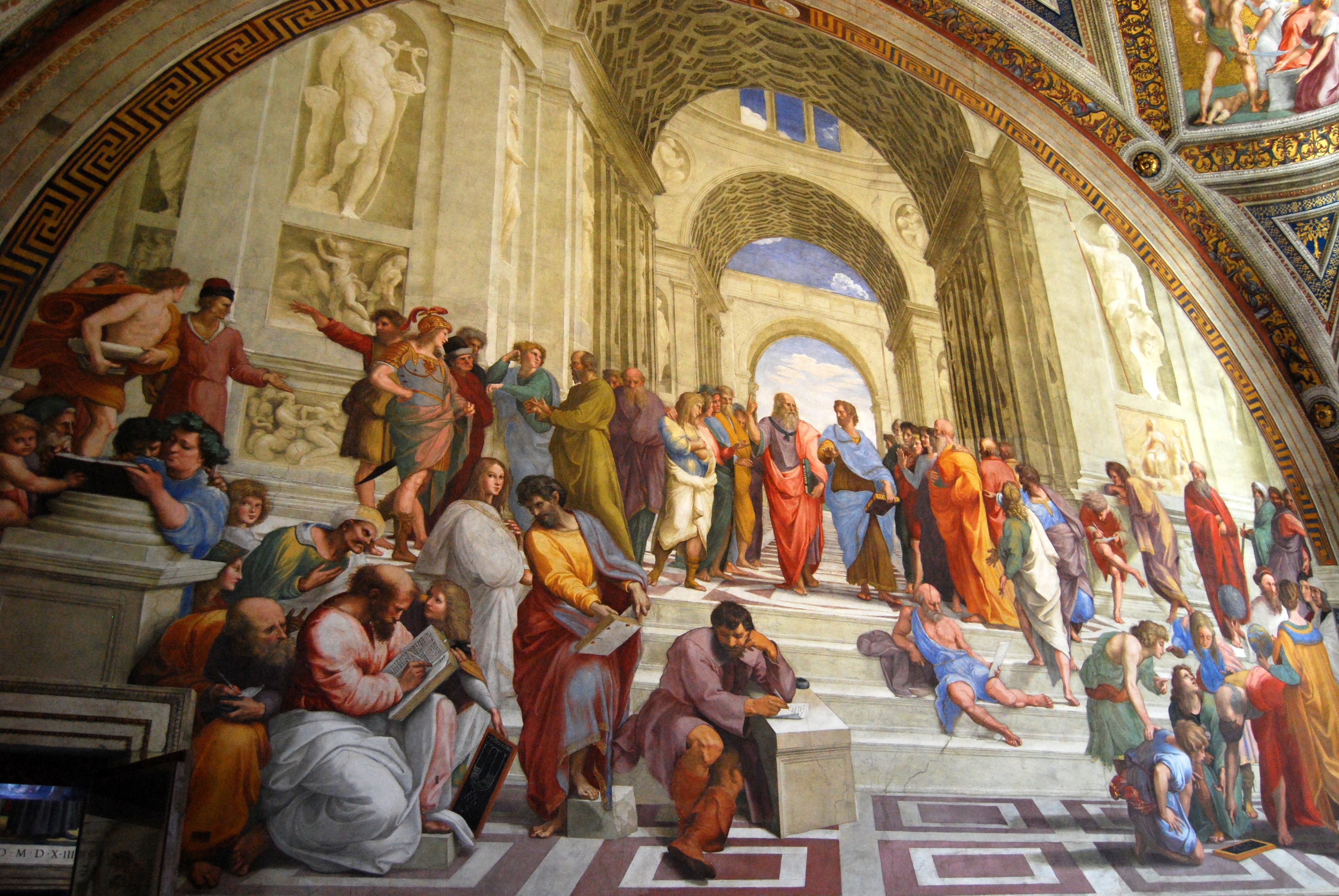
The history of thought is also a history of controversies: two cities, two places of access to reality, which have repeatedly clashed with one another. “What has Athens to do with Jerusalem?”—this is the surprising and biting question of Tertullian.
In 1937, the Jewish-Russian philosopher of religion Lev Shestov (1866 Kyiv – 1938 Paris) took up this issue in a provocative and repellent manner, in order to shame the “prostitute of reason” (according to Martin Luther). To this end, he first called Paul, and then Plotinus and Kierkegaard, as witnesses. Kierkegaard likewise sees theology itself as a harlot subjected to reason as a result of the Enlightenment: “Theology stands adorned at the window and competes for favor, offering its charms to philosophy”—referring to Hegel’s sublimation of theology into the absolute knowledge of philosophy. But as for Abraham and Christ, Kierkegaard says that there is no reconciliation, no trust in reason, no equating of the human and the divine spirit.
To what extent is this true? Or do these two cities act against one another?
Athens represents philosophy as the search for truth. According to Hegel, philosophy does not consist of isolated adventures, where one hero stabs a monster here and another there; rather, philosophy is essentially a context. One of these coherent contexts is the question of the possibility of truth—even if one denies being able to recognize it. When it comes to speaking of truth, Socrates is already ironic, not out of skepticism toward truth, like the sophists, but out of skepticism toward human capacities and the willingness to open oneself to it. While Plato finds in Socrates’ thought a model of value, and even of reality in general terms, he strangely insists that Socrates is not a teacher—and it suffices to think of the last of the seven speeches in the Symposium, in which Socrates steps back from Diotima’s discourse on Eros. Or of the aporias, the impasses in which thought remains trapped, and into which Socrates repeatedly pushes his students. “Plato evidently experienced the power of the meaning of truth in a way that combined knowledge of the absolute validity of ideas with the experience of human inadequacy (…).”
Thus, in Athens there is “knowledge of truth, and at the same time knowledge of the disproportion between one’s own power and it; an acknowledgment of one’s own inadequacy that does not result in skepticism but in the highest trust.” “Truth (…) is excessivum.”
After Athens, philosophy deepened this tension. Truth may be sought in the idea, in the visual form of things (according to Plato), or in being (according to Aristotle). It may be examined as the truth of a proposition, from nominalism to today’s semiotics; it may be grounded in a theory of values (from Augustine to Scheler); but it may also be regarded as ideology and mythical residue, as a lie (according to Nietzsche); in structuralism it becomes a construction. Only skepticism remains—we always understand only what we ourselves have made (verum factum in Vico), namely what we have imposed upon our understanding. Put even more simply—understanding understands (only) itself. In modern thought, especially in Kant, the ego has become the limiting horizon for every kind of “truth.”
But can something true arise that does not simply disappear within subjective horizons? Is there an anticipation of something incomprehensible? Does there take place an appearing and a revelation that exceeds all expectations? Is there a definition of meaning that is not foreseeable but breaks through as an “event,” a meaningful event? This question was posed by the second generation of phenomenologists—not by Husserl, but by Heidegger and, going further, Edith Stein; and more recently Jean-Luc Marion.
If the ego and the world truly constituted the boundary of all knowledge, there would essentially be nothing new; rather, the philosophical view would accept everything that is given only within the scope of its own intentional determinations, and would thus remain centered on the subject. According to Marion, even divinity would become an idol if it could be found only in the templum, in a place “measured” within itself, whereby the Latin word sanctum (sancire—to enclose) does not move away from what is limited. Divinity transforms into an idol created by itself, whereas the true image of divinity lives by virtue of its invisibility, allowing something incomprehensible to occur—in this way the icon is distinguished from the idol. “What is essential (…) comes to it from elsewhere, or rather: comes to it as that elsewhere.”
This means that an “opposite direction” (contre-intentionnalité) breaks into the consciousness of the object: a sensory event. Only then can something fundamentally new be conceived—a meaningful event exerts an influence upon thought, which reveals an unknown counterpart.
As a result, cognition turns into reception and suffering instead of understanding. The primacy of the identical, even of the dominant ego, is destroyed by the primacy of the event. The aim of the subject is not action, but allowing (oneself) to be reconciled with oneself, to be powerless, even overwhelmed. Therefore, the process of every revelation, including religious revelation, deserves to be considered as an event from the perspective of phenomenology, without transforming it into theology or metaphysics. This does not testify to a renunciation of the subject as the bearer of all experience, but means that it cannot encompass all existing visions in a concept. The philosopher becomes a witness (martyr), no longer the “master of experience.” The testimony of such a philosophy deals with “counter-truth” (Augustine); it attacks, inflicting pain mixed with love.
In such thought, the bridge from Athens to Jerusalem takes on an arched form—because Jerusalem bears witness to the “elsewhere,” to the irruption of divinity with which thought cannot contend.
Jerusalem represents a concrete advent, apocalypse—revelation. It emerges precisely from the myth and sacred cult of surrounding cultures. It also emerges from the measured relation between vision and concept as a reality perceived as “divine.” This constitute s a challenge to Athens.
“We have the great task of expressing in Greek those principles that Greece did not know,” said Levinas. To explain the difference between Greece and Israel, he contrasts two figures: Odysseus, who after a purposeless wandering returns to his homeland (just as being always assigns nothingness to its origin), and Abraham, who must set out toward the absolutely unknown, toward statelessness, following a strange voice in complete obedience to hearing. What “Greek principles” have been broken here? Odysseus ultimately autonomously accomplishes a return to what is known; Abraham, by contrast, sets out into the unknown on a “command,” going beyond autonomous subjectivity and emancipatory reason.
In the face of the original figure of Abraham, existence appears as a hostage. Levinas, as the spokesman of “Jerusalem,” seeks to undermine the personal significance of the ego in ethics. Like Abraham, the ego must submit its autonomy to the voice of the other and of otherness, which requires no justification. In this way the subject becomes what it has long been, according to its etymology: subject. In the future, ethical action may mean nothing other than obedience to the other. In Levinas, this other remains strictly worldly—it remains a translation of the originally divine call to Abraham into the human call of a person in need, into the face (visage), which is only a call (to me). Masculine maturity must lose itself in immature femininity and the vulnerability of the ego, in a mode of being dictated by the “other”—this is a glaring violation of autonomy and dignity. The self and identity, the postulates of “Athens,” lead elsewhere: the master becomes the slave. The occupation of the ego by the “other” must be abandoned together with the abandonment of the subject—such is the ethical response of Jerusalem to Athens.
Yet this “other,” who dwelt in Jerusalem, still knows apocalypse, for Jerusalem was also a place of execution; it was the place of the “death of God” and His resurrection.
It is probably no coincidence that in recent years several philosophical reformulations of Paul have appeared (Badiou, Derrida, Žižek, Agamben). Paul did not know Jesus as a historical figure, but his upheaval in Damascus paved the way for a revolution that would replace postmodern “multiple identity” with something unprecedented. Thus, from Abraham to Paul.
Giorgio Agamben describes his fall in a philologically precise and moving commentary on the Letter to the Romans. Paul is a “theorist of the new subject,” who has passed through rupture, an unforeseen event, a fruitful stripping away. From now on one should no longer drag along the old, but rather promote openness and reconfiguration. “Therefore, if anyone is in Christ, he is a new creation. The old has passed away; behold, the new has come” (2 Cor 5:17).
This newness leads to universalism, and from the point of view of possibility, anyone may belong to it. The event of Christ, according to Paul, unites in the confession of a new existence, a new community—without a specific, preconceived culture, without defined values, without rules, without “being oneself and being other,” aristocratic and separate. Thus, without the arrogance of a (supposedly) higher culture and higher education (as in the case of the Greeks), a refined legal system (as in the case of the Romans), or election by blood (as in the case of the Jews) (1 Cor 1:22 ff.). There are no prerequisites in the event of Christ other than allowing oneself to be touched by this event.
Moreover, any form of state or sacred power becomes secondary. This applies to the politico-cosmic order of ancient empires and the Roman Empire; it also applies to the election of Israel, which found its elitist expression in the Torah. The event of Christ is a-cosmic, non-legal. Those who have heard the klēsis, the new call, belong to a new polis, a new Israel. The ecclesia, being called, is universal. This call excludes no one. “There is neither Jew nor Gentile, neither slave nor free, nor is there male and female, for you are all one in Christ Jesus” (Gal 3:28; cf. 3:13). The differences of this world have become irrelevant in the face of the new.
“Jerusalem” thinks of the “elsewhere” and will confront “Athens” with it. It thinks of a prior blinding by a dazzling light that underscores its testimony.
It was Athens that developed a categorical vision of protecting and ordering the world. In many later visions, such as Kant’s Königsberg, seeing was even more integrated with skepticism and with the standpoint of the subject. This gained the power to establish a stable, defining position in the pursuit of clarity and mastery over the world.
But it was also the freedom of reason that made Athens, through its great representatives, the school of the world—reason, nous, does not arise from acting on its own initiative, but rather from listening, from allowing itself to be carried by what appears. Yes! It too can be blinded, in Plato’s case—by the sun outside the human cave. Such blinding accompanied philosophy in every kind of search for truth.
Jerusalem gives a name to what appears and blinds. It is even double: first the unutterable, non-idolatrous, non-objective name shem, and then the Son of Man, ben adam, objective, audible, like all others, and thus banal. A tension remains between these two names—between seeing and yet not seeing, hearing and yet not hearing, understanding and yet not understanding. This is a constitutive stimulus for the philosophical interpretation of Jerusalem.
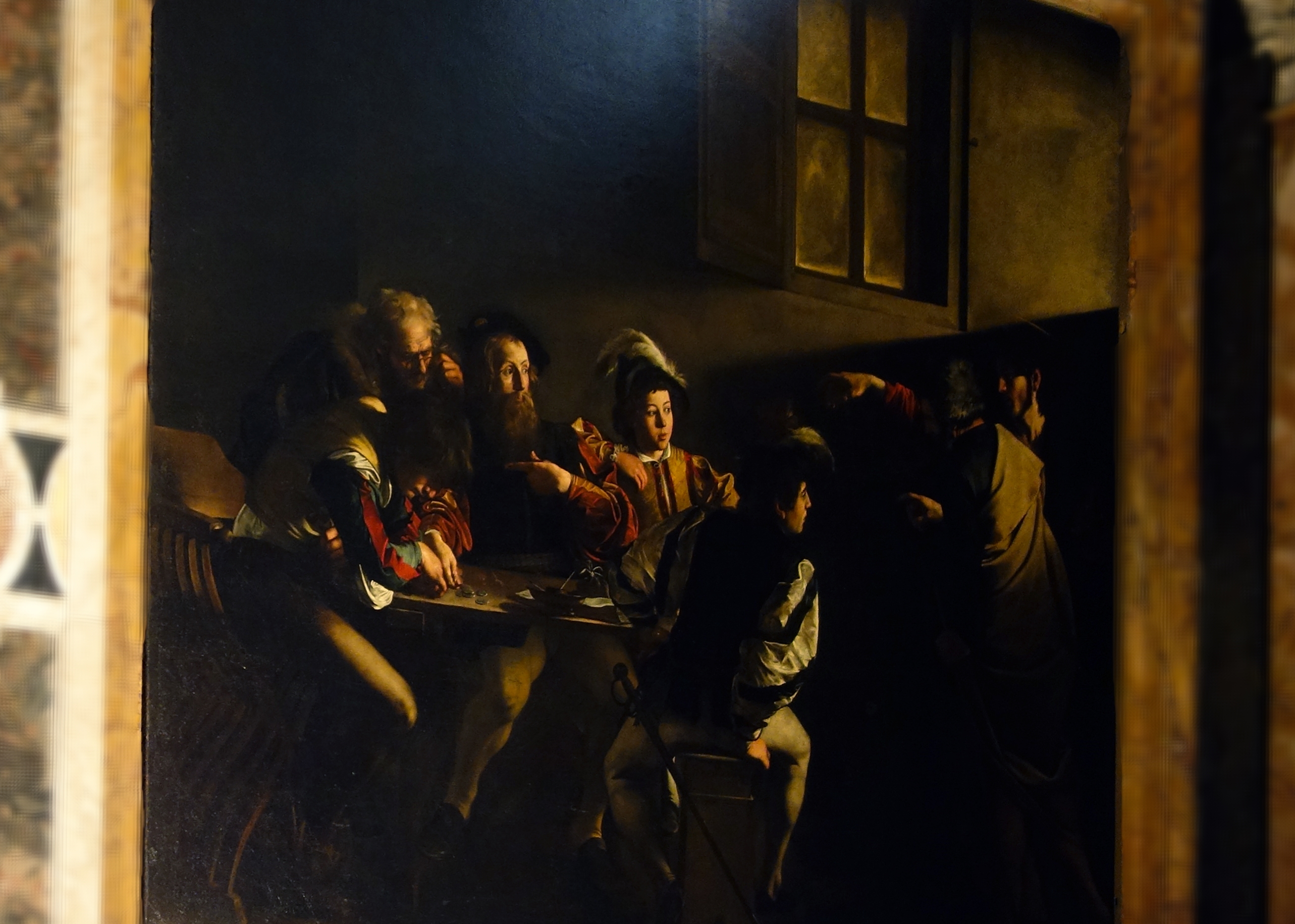
Kierkegaard, a student and admirer of Socrates, places the balanced and self-assured gaze of thought before a single tribunal—thought can be withdrawn from itself only through a paralyzing revolution. But this happens beginning from an encounter. Yes—from a gaze: “Christian truth (may) not really be an object of ‘contemplation’ (…). For Christian truth (…) itself has eyes to see. Yes. It is nothing but eyes; but that would be rather disturbing. Yes. It would prevent me from looking at a picture or a piece of fabric if (…) I discovered that the picture or the fabric were looking at me—and so it is with Christian truth; it looks at me to see whether I do what it says I ought to do.”
By overturning the active attachment of thought to the pathos of being moved, a bridge from Athens to Jerusalem is built: reason is a bridge that goes beyond itself or tears itself beyond itself—because as reason it has inscribed within it wonder, thaumazein, as a result of the appearance of divinity. Wonder may even become, in literary terms, a “piercing delight,” because reason encounters not “It,” such as Being, Nothingness, Phenomenon, Structure, the transcendental ego, but rather “You” as the ground of Being.
The most popular book of Cardinal Joseph Ratzinger is Introduction to Christianity from 1968—several decades later, Pope Benedict XVI took up the Old Testament words about the “court of the Gentiles.” This court provided non-Jewish pilgrims of goodwill with an accessible space before the inaccessible sanctuary of the Temple in Jerusalem. The programmatic phrase clearly refers to Ratzinger’s conviction about thought open to transcendence in its depth. There is no great philosophy that has not experienced illumination and received guidance from religious tradition—let us think both of the philosophies of Greece and India, the philosophies that developed within Christianity, as well as modern philosophies that were convinced of the autonomy of reason and regarded it as the ultimate measure of thought. The court of the Gentiles can therefore—using a generous expression—also be called the “court of reason.”
In the task entrusted to him as pope, to perceive the kat’holon, Benedict XVI clearly pointed to the world of religions and their immanent reason: “But among the deeply religious cultures of the world, this exclusion of the divine from the universality of reason is perceived as an attack on their most intimate convictions. A reason that is deaf to the divine and relegates religion to the realm of subcultures is incapable of dialogue.”
This rationality of religion does not remain confined to a mere postulate; rather, the argument is based on anthropology: the human capacity for truth. “But this man is touched by truth itself in the depth of his existence. (…) The more human a culture is, the higher it rises, the more it will respond to the truth that was previously closed to it; the more it will be able to appropriate this truth and become like it.” “In the question of man and the world, the question of the divine is always understood as the prior and truly fundamental question. One cannot understand the world and cannot live properly if the question of the divine remains unanswered. Yes, the essence of great cultures is that they interpret the world by arranging the relationship with the divine.”
Truth, as an intercultural rational view of what is valid, also becomes a point of reference for humanity and the ethics of religion. This is not a minimal global consensus on morality, but rather the maximum possible effort to find truth (about God, about human beings, about the world), in order to overcome purely cultural limitations in action. “The Christian faith has proved to be the most universal and rational religious culture, which today also offers reason that fundamental structure of moral intuition that leads to a certain evidence or at least justifies reasonable moral conviction, without which society cannot exist.” This is an invitation for Christianity not to bury its treasures. On the contrary: to multiply them in defense of reason.
What is innovative in Ratzinger’s thought is that he allies himself with the enlightenment that is necessary today. However, enlightenment can no longer mean “the liberation of reason from its deceptions, but rather liberation from the deception that is reason itself.” And reason as such would then be deception if it could only pretend that it is oriented toward a set of intuitions and then, by itself, would be able to free itself from all deception. In other words, reason is instrumental; it requires an antecedent “everything” toward which it is directed, and even more—toward which it is itself attuned. Then the biblical word does not become an object of reason, but becomes a fruitful resistance of reason. “The historical instrument of faith can once again liberate reason as such, so that—initiated by it—it can once again see itself. (…) Reason does not become whole without faith, and faith does not become human without reason.”
For only the search for truth by reason leads to God, not a relationship with God enforced by fear like a sword. Violence “contradicts the nature of God and the nature of the soul. (…) To convince a rational soul, one does not need the arm, nor instruments of striking (…), non-rational action—non syn logo—is contrary to the nature of God.”
Benedict XVI also built a bridge from Athens to Jerusalem—because reason goes beyond itself: it encounters another, equally familiar and distant “within and above,” interior intimo meo et superior summo meo. The Logos of the Prologue of John begins with the use of reason and leads into the depth of divinity. With the Logos, the court opens toward the interior of the temple. In this way, the passage from unbelief through thought to faith is marked. Benedict XVI thus became a voice for the immense European heritage inscribed in Christianity, just as Christianity brought European thought to its highest form. Greek and Jewish knowledge are equally present in him—truth comes from thinking as something truly other, yet as a friend, as deeply familiar as it is attractively and mysteriously distant. This is perfectly summed up in the beautiful anonymous words: “All the lamps of Greece burn for the sun that is called Christ.”
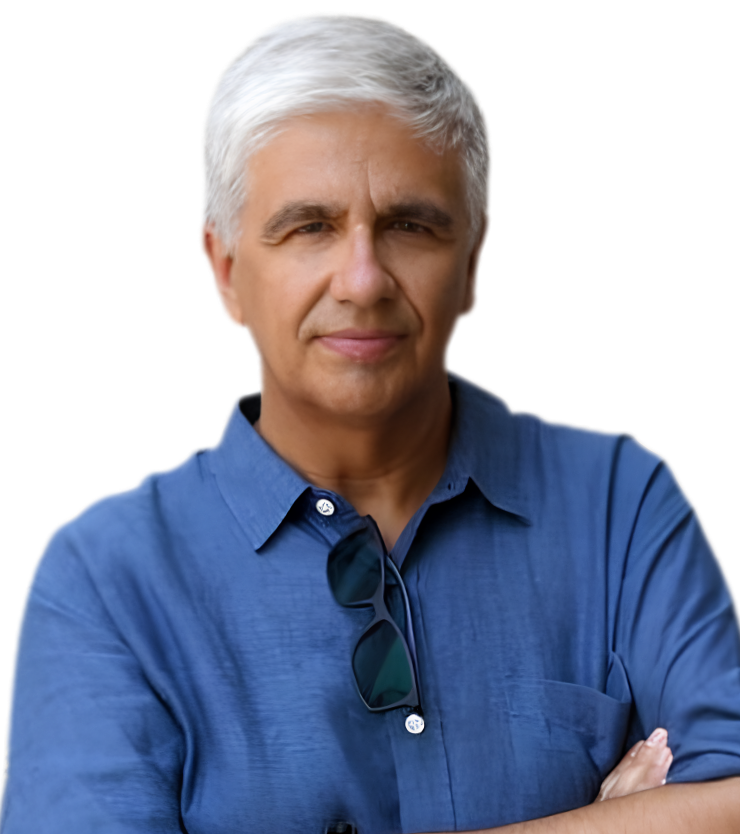
Lecture by Prof. Hanna-Barbara Gerl-Falkovitz, delivered during the closing gala of the Days of St. John Paul II at the Roman universities, 29 November 2024.
Want to stay up to date? Join our newsletter and share our content on social media. You can also visit the ‘Support us’ page to find out how to support the Foundation’s activities.


'/%3e%3cpath%20d='M106.263%2055.6572C118.904%2056.018%20129.442%2045.9903%20129.8%2033.2598C130.158%2020.5292%20120.201%209.91652%20107.561%209.55569C94.9198%209.19486%2084.3819%2019.2225%2084.0236%2031.9531C83.6653%2044.6837%2093.6223%2055.2963%20106.263%2055.6572Z'%20fill='url(%23paint1_linear_1843_155)'/%3e%3cpath%20d='M68.5454%2055.6572C81.1862%2056.018%2091.7241%2045.9903%2092.0824%2033.2598C92.4407%2020.5292%2082.4837%209.91652%2069.8428%209.55569C57.202%209.19486%2046.6641%2019.2225%2046.3059%2031.9531C45.9476%2044.6837%2055.9045%2055.2963%2068.5454%2055.6572Z'%20fill='url(%23paint2_linear_1843_155)'/%3e%3cdefs%3e%3clinearGradient%20id='paint0_linear_1843_155'%20x1='16.1909'%20y1='16.3074'%20x2='48.8019'%20y2='48.6885'%20gradientUnits='userSpaceOnUse'%3e%3cstop%20stop-color='%23951333'/%3e%3cstop%20offset='0.389423'%20stop-color='%23FF0B20'/%3e%3cstop%20offset='0.8125'%20stop-color='%23FD4D01'/%3e%3c/linearGradient%3e%3clinearGradient%20id='paint1_linear_1843_155'%20x1='116.438'%20y1='12.9124'%20x2='94.9175'%20y2='50.2411'%20gradientUnits='userSpaceOnUse'%3e%3cstop%20stop-color='%230270F2'/%3e%3cstop%20offset='0.311512'%20stop-color='%2302A0D2'/%3e%3cstop%20offset='1'%20stop-color='%2300C6FF'/%3e%3c/linearGradient%3e%3clinearGradient%20id='paint2_linear_1843_155'%20x1='69.8429'%20y1='9.55569'%20x2='68.5269'%20y2='55.6566'%20gradientUnits='userSpaceOnUse'%3e%3cstop%20stop-color='%23FCDB00'/%3e%3cstop%20offset='0.567308'%20stop-color='%23FEC800'/%3e%3cstop%20offset='1'%20stop-color='%23FD8F00'/%3e%3c/linearGradient%3e%3c/defs%3e%3c/svg%3e)